

Which Hand Should You Wear a Crystal Bracelet On? (Left vs Right, Explained)
Certified & Energised
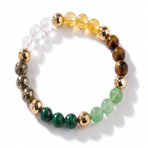
GemSense Dhan Yog Crystal Bracelet for Wealth & Financial Success
The reader-favourite place to start — five wealth stones on one wrist, SGL certificate in the box.
₹ 699₹ 1,399Wear a crystal bracelet on your left wrist when you want to draw energy in — calm, love, restful sleep, protection — because in yogic tradition the left side is the receiving, lunar (ida) channel. Wear it on your right wrist to send energy out — confidence, focus, wealth, action — the projecting, solar (pingala) side. In short: receive on the left, project on the right, and let your intention lead.
If you have ever slipped on a new bracelet and paused — left hand or right hand? — you are asking exactly the right question. Deciding which hand to wear a crystal bracelet on follows a simple, centuries-old logic about how prana (life energy) is believed to move through the body. This guide covers which wrist to choose, stone by stone, with the Indian yogic reasoning behind it — plus the practical questions: dominant hands, stacking, sleeping, and how Rudraksha is different.
Prefer this through an Indian, rashi-by-rashi lens (in Hindi-English)? Read our companion Complete Indian Guide: Crystal Bracelet — Left Hand or Right Hand.
A gentle note before we begin: crystals and Rudraksha are spiritual and cultural tools, not medicine. They do not diagnose, treat, cure, or prevent any illness, and are best used to complement — never replace — qualified medical or mental-health care.
The Core Rule: Left Wrist Receives, Right Wrist Projects
Across crystal-healing traditions, the body is read as a two-way system. Your left side receives energy from the world around you, and your right side projects energy outward into it. A crystal bracelet simply rides along with whichever current you choose.
So the decision of left hand or right hand comes down to one question: do you want to absorb a stone's quality, or broadcast it? If you want to feel calmer, more loved, more protected, or more rested — that is energy coming in, so reach for the left wrist. If you want to show up bolder, sharper, wealthier, or more driven — that is energy going out, so choose the right.
| Left Wrist — Receiving (Ida / Chandra / Moon) | Right Wrist — Projecting (Pingala / Surya / Sun) |
|---|---|
| Lunar, cooling, inward, "yin" | Solar, energizing, outward, "yang" |
| Draws energy in | Sends energy out |
| Calm, love, sleep, healing, protection, intuition | Confidence, focus, wealth, success, willpower, action |
| Best for absorbing a stone's qualities | Best for radiating a stone's qualities |
The Yogic Logic: Ida, Pingala and the Two Energy Channels
This left-in, right-out idea is not a modern marketing invention — it maps almost perfectly onto a much older Indian framework. In yogic anatomy, energy travels through a vast web of subtle channels called nadis. Classical texts such as the Hatha Yoga Pradipika and the Goraksha Samhita count roughly 72,000 of them, but three matter most: ida, pingala, and the central sushumna.
According to the traditional model of these subtle energy channels (nadis), the ida nadi runs along the left of the spine, ending at the left nostril. It is described as chandra (lunar), feminine, cooling, reflective and receptive — the channel of the moon. The pingala nadi runs along the right, ending at the right nostril, and is surya (solar), masculine, warming, active and outward-moving — the channel of the sun. As the Hatha Yoga Pradipika and modern yoga teachers describe, the whole aim of hatha yoga is to balance these twin currents so energy can rise through the central sushumna.
Hold that image against your wrists and the rule clicks into place. The left wrist sits on the lunar, receiving (ida) side, so it is where you invite softness, stillness and protection inward. The right wrist sits on the solar, projecting (pingala) side, so it is where you push drive, courage and abundance outward. The crystal becomes a small, wearable amplifier on whichever channel you choose.
Which Hand for Which Intention? (Plus a 4-Step Method)
Before the stone-by-stone table, here is the quick intention map. Choose the left wrist when your goal is mostly internal:
- Emotional calm, lower stress, soothing anxious thoughts
- Self-love, healing the heart, opening to relationships
- Better, deeper sleep and quieter evenings
- Protection — keeping heavy or negative energy away from you
- Intuition, reflection and spiritual receptivity
Choose the right wrist when your goal points outward into the world:
- Confidence before a meeting, exam, pitch or stage
- Focus, discipline and follow-through on goals
- Wealth, business growth and money-flow (dhan and samriddhi)
- Willpower, courage and decisive action
- Clearer, more persuasive speech and presence
Still unsure which hand to wear a crystal bracelet on? Use this simple four-step method:
- Name one clear intention. Pick a single word — calm, love, protection, confidence, wealth. One bracelet, one job.
- Decide the direction. Is this energy you want to draw in (left) or send out (right)?
- Check comfort. If the bracelet snags on your watch or work, switch wrists — intention still leads, and a stone you actually wear beats a "correct" one you take off.
- Set it on first wear. Hold the bracelet, take three slow breaths, and silently state your sankalpa (intention). Then wear it consistently for a few weeks before judging.
Stone-by-Stone: Which Wrist for Each Crystal Bracelet
Different stones carry different "jobs," so the ideal wrist shifts with the crystal. Here is a practitioner's quick-reference table, followed by notes on the most-loved ones.
| Crystal Bracelet | Recommended Wrist | Why (traditional belief) |
|---|---|---|
| Rose Quartz | Left | Receiving love, self-worth and emotional calm — the classic heart-opening, lunar stone |
| Amethyst | Left | Drawing in calm, restful sleep and intuition; a soothing, receptive stone |
| Black Tourmaline | Left (right to "shield outward") | Absorbing and deflecting heavy or negative energy; grounding protection for yourself |
| Selenite | Left | Inviting clarity and a clean, high-vibration calm; also used to cleanse other stones |
| Lapis Lazuli | Either (left for insight, right for confident speech) | Truth, intuition and self-expression — a throat-and-third-eye stone |
| Tiger's Eye | Right | Projecting courage, focus and willpower into bold action |
| Pyrite | Right | Sending out drive for wealth, ambition and manifestation — the "stone of abundance" |
| Citrine | Right | Radiating optimism, success and money-flow energy |
| Evil Eye (Nazar) | Left (or as preferred) | Guarding against buri nazar; a protective amulet that deflects ill-wishing |
Heart and calm (left wrist). A rose quartz bracelet is the go-to for self-love and gentle emotional healing, so it belongs on the receiving side. The same is true for an amethyst crystal bracelet, long associated in crystal lore with quieter evenings and easier sleep — keep it on the left so its soothing quality flows toward you.
Protection (usually left). A black tourmaline bracelet is the classic grounding-and-shielding stone. Most people wear it on the left to keep heavy energy away from themselves; if you instead want to "project" a protective field around your space, some practitioners move it to the right. The same logic applies to an evil-eye nazar amulet, a deeply rooted protective symbol across India.
Drive, confidence and wealth (right wrist). A tiger's eye bracelet is prized for courage and focus, so it sits on the projecting side where it can fuel action. A pyrite bracelet — nicknamed "fool's gold" and treasured as an abundance stone — and citrine both belong on the right, where their go-getter energy radiates outward into your work and ambitions.
Dominant vs Non-Dominant Hand: Does It Override the Rule?
Here is where people get tangled. There are two overlapping models, and they usually agree:
- The fixed model: left is always receiving, right is always projecting, regardless of which hand you write with. This is the most common reading and the one most crystal practitioners use.
- The dominant-hand model: your non-dominant hand receives and your dominant hand projects. For the right-handed majority, that lands on exactly the same answer — left receives, right projects.
For most readers there is no conflict at all. Comfort matters too: many people prefer the non-dominant wrist because the dominant hand is busy all day — more knocks, and more reasons to take the bracelet off. A stone you actually keep on does more than a "perfectly placed" one in a drawer.
Can You Wear Two Crystal Bracelets — One on Each Wrist?
Yes — and pairing a receiving stone with a projecting stone is one of the most elegant ways to wear crystals, letting you take energy in and send energy out at once. A common combination is a calming stone on the left to settle the nerves and an energizing stone on the right to power action — for example, amethyst on the left for steadiness and tiger's eye on the right for courage before a big day.
If you would rather stack several on one wrist, that is fine too. To build a balanced stack without muddling your intentions:
- Pick a theme. Keep a stack pointed at one broad goal (say, "calm focus") rather than ten unrelated wishes.
- Group by direction. Put your receiving stones on the left wrist and your projecting stones on the right, so each wrist tells a consistent story.
- Limit the crowd. Two to four bracelets per wrist is plenty; more than that and the energies (and the look) start competing.
- Add a "cleanser." A selenite bracelet in a stack is traditionally believed to keep the neighbouring stones energetically clear.
Men vs Women: The Principle Is the Same
The receiving-left, projecting-right rule applies identically to everyone. The "feminine/masculine" labels attached to ida and pingala describe energetic qualities — lunar and solar — not the gender of the person wearing the bracelet. A man wanting calm wears his stone on the left; a woman wanting confidence wears hers on the right. Same channels, same logic, no separate rulebook.
If You're Left-Handed
If you follow the fixed model, nothing changes: left still receives, right still projects, so wear your crystals exactly as described above. If you prefer the dominant-hand model, simply flip it — your dominant left hand becomes the projecting side and your non-dominant right hand becomes the receiving side. Both are valid; pick one and stay consistent so your intention has a clear, steady channel. When in doubt, trust the fixed left-in / right-out rule, which is the version most widely taught.
How Rudraksha Is Different: The Right-Hand Japa Mala
Rudraksha follows a different etiquette from crystal-healing bracelets, and it is worth getting right. A traditional japa mala of 108 beads plus one meru (guru) bead is primarily a tool for chanting — and for chanting, it is held and rotated in the right hand. You roll one bead at a time over the thumb using the middle finger, traditionally avoiding the index finger (associated with the ego, ahamkara), and you never cross the meru bead — you reverse direction when you reach it.
A full japa mala is also typically worn around the neck or carried, resting near the heart, rather than wrapped on the wrist. A smaller Rudraksha bracelet, on the other hand, can be worn on either wrist for daily grounding and steadiness — many people choose the left to draw in its calming, centering quality. If you are building a daily practice, explore our SGL lab-certified Rudraksha collection, where every bead is independently certified so you know exactly what you are chanting with.
Daily Care: Skin Contact, Sleeping, and When to Switch Wrists
A few practical habits help your bracelet do its job:
- Skin contact helps. Wearing the stone directly against the skin is traditionally preferred, as it keeps the crystal in steady contact with your energy field through the day.
- Sleeping with it is optional. Soothing left-wrist stones like amethyst are often kept on overnight, when the body is believed to be most receptive. Many people, however, prefer to remove bracelets at night to let the stones rest and to protect the elastic and the gemstones from strain.
- Switch wrists when your goal changes. There is no harm in moving a versatile stone — say, lapis lazuli — to the right for a confident presentation and back to the left for a quiet, reflective weekend.
- Cleanse and recharge regularly. Stones are believed to gather "heavy" energy with use. Rest them overnight on a selenite charging plate, or under the light of the full moon (Purnima), then re-set your intention. Every GemSense piece arrives sage-cleansed and moon-charged, so it is ready to wear from day one.
Does the Hand Really Matter? An Honest, Intention-First Answer
Here is the candid truth a good practitioner will tell you: the left-versus-right rule is a meaningful, traditional framework — not a strict law of physics. Plenty of people wear their bracelets on whichever wrist feels comfortable and still feel a benefit. What matters most is your intention and your consistency — choosing a stone deliberately, wearing it with a clear purpose, and giving it time.
So think of the wrist as a helpful tie-breaker, not a make-or-break decision. If the receiving/projecting logic resonates with you, use it — it adds focus and ritual. If two wrists feel equally right, pick the one you will actually keep the bracelet on. The hand fine-tunes the practice; your intention powers it.
Frequently Asked Questions
Which hand should you wear a crystal bracelet on?
Wear it on your left wrist to receive energy (calm, love, sleep, protection) and on your right wrist to project energy (confidence, focus, wealth, action). Match the wrist to your intention — drawing energy in goes left, sending energy out goes right.
Can I wear a crystal bracelet on my right hand if I'm right-handed?
Absolutely. In the most common (fixed) model, the right wrist is the projecting side for everyone. Wear an energizing stone like tiger's eye or pyrite there to push confidence and ambition outward — comfort is the only caveat, since the dominant hand sees more wear.
Which wrist is best for a rose quartz bracelet?
The left. Rose quartz is the stone of love, self-worth and emotional softness — all qualities you want to draw inward — so the receiving (left) wrist is the traditional choice.
Which hand should I wear a crystal bracelet for money and wealth?
The right wrist. Abundance stones such as pyrite and citrine are believed to radiate go-getter, money-flow energy outward into your work and ventures, so the projecting (right) side suits them best.
Can I wear two crystal bracelets at the same time?
Yes. Pairing a calming stone on the left with an energizing stone on the right lets you receive and project at once. If stacking on one wrist, keep the bracelets pointed at a single theme and limit it to two to four so the intentions stay clear.
Does it matter which hand if I'm left-handed?
If you use the fixed left-in / right-out rule, nothing changes. If you prefer the dominant-hand model, flip it so your non-dominant right hand receives and your dominant left hand projects. Either is valid — just stay consistent.
Do men and women wear crystal bracelets on different hands?
No. The principle is identical. The lunar/solar, feminine/masculine labels describe the energy of the channel, not the gender of the wearer.
Should I sleep with my crystal bracelet on?
It is a personal choice. Calming left-wrist stones like amethyst are often kept on overnight, when the body is thought to be most receptive. Others prefer to remove bracelets at night to rest the stones and protect the elastic. Both approaches are common.
Which hand do I hold a Rudraksha mala in?
A japa mala is traditionally held and rotated in the right hand, using the thumb and middle finger (not the index finger). A full 108-bead mala is usually worn at the neck rather than the wrist, while a smaller Rudraksha bracelet can be worn on either wrist.
How often should I cleanse and recharge my crystal bracelet?
A gentle cleanse every couple of weeks — or sooner after stressful days — is a good rhythm. Rest the bracelet on a selenite plate overnight or under the full moon, then re-set your intention. Your GemSense bracelet arrives already sage-cleansed and moon-charged.
Does the wrist really change the effect, or is it just belief?
The left/right rule is a traditional, intention-focused framework rather than a measurable law. Many wearers feel a benefit regardless of wrist. Your clear intention and consistent wear matter most; the wrist simply fine-tunes the practice.
Choosing Your Bracelet with Confidence
Once you know the simple rhythm — receive on the left, project on the right, intention first — choosing which hand to wear a crystal bracelet on stops being a puzzle and becomes part of the ritual. Pick the stone that matches what you want more of right now, give it the wrist that points your energy the right way, and wear it with a little patience.
Every GemSense crystal is 100% natural and lab-certified, ships with a Certificate of Authenticity, and arrives sage-cleansed and moon-charged — one reason more than 5,000 customers have rated us 4.9 out of 5, with free shipping across India and Cash on Delivery available on 20,000+ pincodes. When you are ready to find your stone, browse our full collection of natural crystal bracelets and choose the one your wrist has been waiting for.
Shop the crystals in this guide
Certified & Energised
GemSense Dhan Yog Crystal Bracelet for Wealth & Financial Success
The reader-favourite place to start — five wealth stones on one wrist, SGL certificate in the box.
₹ 699₹ 1,399Black Tourmaline Bracelet: Benefits, How to Wear, and Who Should Wear It
7 Mukhi Rudraksha Benefits: Mahalakshmi's Bead for Wealth & Sade Sati
Related Posts

Rudraksha Mala Guide: Japa Rules, 108 vs 54 vs 32 Beads & How to Spot an Original

5 मुखी रुद्राक्ष के फायदे: पंचमुखी रुद्राक्ष किसे और कैसे पहनना चाहिए

How to Wear a Pyrite Anklet: Which Leg, Which Day & the Rules That Matter

6 Mukhi Rudraksha Benefits: Kartikeya's Bead for Confidence, Focus & Expression


