

Pyrite Anklet Benefits: The Lakshmi Payal Tradition, Explained
Certified & Energised
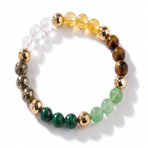
GemSense Dhan Yog Crystal Bracelet for Wealth & Financial Success
The reader-favourite place to start — five wealth stones on one wrist, SGL certificate in the box.
₹ 699₹ 1,399A pyrite anklet carries the classic golden wealth stone at your ankle — traditionally associated with prosperity, confidence and grounding — in the form Indian women have trusted for centuries: the payal. Wearers treat it as a quiet, always-on anchor for money intentions, usually worn on the left leg, the receiving side. It supports your effort; it never replaces it. Here is the full, honest picture.
Every few days a message lands in our inbox that goes something like this: "I love my pyrite bracelet, but now I keep seeing pyrite anklets everywhere. Is that a real thing, or just Instagram?" It is a fair question, and it deserves better than a trending-audio reel. The crystal anklet is suddenly having its moment — and when the golden wealth stone shows up in the one ornament Indian women have worn at their feet for thousands of years, something worth explaining properly is happening.
So here it is, the long version. This guide covers why the anklet — of all placements — makes such deep cultural sense for pyrite, what a pyrite anklet is traditionally believed to do for the wearer, which leg to wear it on (a straight answer, not a shrug), whether men can join in, how the anklet compares with the trusty pyrite bracelet, and how to care for a stone that genuinely dislikes water. As always at GemSense: tradition explained honestly, zero guaranteed miracles. Chalo — feet first.
Why a Pyrite Anklet Instead of a Bracelet?
Because in India, the ankle is where auspiciousness has always entered. The payal is one of our oldest ornaments — the sound that announces a woman's presence in her own home — and a new bride steps into her sasural feet first, welcomed as Lakshmi herself. A pyrite anklet simply seats the classic wealth stone inside a tradition your family already keeps.
Think about what feet mean in our culture. At griha pravesh, the new bride tips over a kalash of rice with her right foot and walks in on alta-dipped feet, leaving red footprints across the threshold — because her arrival is treated as the arrival of Lakshmi ji into the family. We touch the feet of elders to receive their blessings. Rangoli and toran decorate the doorstep, not the roof. In the Indian imagination, prosperity quite literally walks in — so an ornament worn at the ankle sits exactly where abundance is believed to enter a home.
The payal carries its own gentle folklore too. Its soft chham-chham announces presence, and older generations say the sound keeps negativity from settling into quiet corners of the house. A daughter's first payal is a small rite of passage; a bride's wedding payal is often an heirloom. This is not a jewellery trend borrowed from abroad — it is one of the longest-running jewellery traditions on earth.
And here is the detail we find most satisfying. Tradition asks us not to wear gold on the feet — gold is considered Lakshmi's own metal, too sacred for the body's lowest point, which is why payals have almost always been silver. Pyrite resolves this beautifully. It glows like gold but is not gold at all: it is a natural iron sulfide mineral, famously nicknamed "fool's gold" for the prospectors it once fooled. You get the golden shine of prosperity at your ankle without ever touching the old taboo. That is exactly why we call our Natural Pyrite Anklet the Lakshmi Payal — golden intention, in a form tradition smiles at. It is also why the crystal anklet as a category feels less like a new fashion and more like a homecoming.
What Are the Benefits of Wearing a Pyrite Anklet?
The traditional pyrite anklet benefits are the same three that made pyrite famous — wealth energy, confidence and grounding — carried at the ankle instead of the wrist. The stone does not change with placement; what changes is how constantly, and how privately, it stays with you — from the first step of the morning to the last one at night.
A Wealth Intention That Stays With You All Day
Pyrite is the classic wealth stone of Vastu and folklore, traditionally associated with prosperity, action and the confidence to ask for what your work is worth. (If you want the full landscape of money stones, our guide to the best crystal bracelet for money and wealth compares them all.) An anklet turns that association into a private daily ritual: you see it while dressing, feel it while walking, and every glance is a two-second reminder of the goal you set for yourself. That is what a wealth crystal honestly does — it keeps the intention alive; it does not make the bank balance rise on its own. One caveat matters, though: this only works with real stone. Every GemSense piece is natural pyrite, SGL lab-certified, because an intention deserves better than painted glass.
Confidence in Every Step
Pyrite's oldest reputation is courage. Strike raw pyrite against steel and it literally sparks — which is how it earned its name from the Greek pyr, meaning fire. Traditionally it is the stone of asking: for the order, for the raise, for the payment that has been "processing" for forty days. Wearers describe the ankle version as a quieter kind of bold — nobody in the meeting sees it, but you know it is there, glinting under the hem of a saree or a pair of jeans. And whether you choose polished beads or the rougher nugget look, the raw pyrite anklet benefits are identical in tradition — raw pieces are simply the same mineral, less tumbled. Either way, the point is the same: a small golden nudge to walk in like you belong.
Grounding, From the Ground Up
In crystal tradition, grounding stones are worn low on the body — and nothing sits lower than an anklet. Pyrite, an earth mineral through and through, is traditionally linked to steadiness: staying planted when the day gets noisy. Wearers often say an anklet "keeps them on their feet" in both senses — a gentle physical presence at every step that doubles as a cue to come back to the present moment. We will be straight with you about one thing, though: you will find listings claiming pyrite anklets improve blood circulation or cure leg pain. There is no evidence for any of that, and we will not pretend otherwise. Grounding here is a spiritual practice and a mindfulness habit — valuable on its own terms, and promised as nothing more.
Which Leg Should You Wear a Pyrite Anklet On?
Tradition's answer is the left leg. In crystal practice the left side of the body is considered the receiving side — energy is believed to flow inward through it — and a wealth anklet is about drawing abundance towards you. For women asking specifically: yes, the left ankle is the traditional default, the same logic that places wealth bracelets on the left wrist.
The right leg has its own place in the story. The right side is considered the projecting side — the one that gives and expresses — which is exactly why it is the bride's right foot that tips the kalash at griha pravesh. Some wearers deliberately shift their pyrite to the right ankle on days they need to project confidence outward: a pitch, a difficult conversation, a stage. Both choices live comfortably inside tradition, and neither is a mistake.
Now the honest note we include in every "which side" answer: consistency matters more than geometry. A pyrite anklet worn on the "wrong" leg every single day will serve your intention far better than the "right" leg remembered twice a month. Remember also that traditional payals are worn on both legs at once — so if you ever choose a pair, the question gracefully retires itself. Pick a leg, give the choice a meaning you can repeat to yourself, and let it become habit. That is the entire trick, and anyone who tells you the wrong ankle "blocks the energy" is selling drama, not tradition.
Can Men Wear a Pyrite Anklet?
Yes — without hesitation. Pyrite has no gender in any tradition, and anklets on men are far older than modern fashion: Indian men have worn ankle ornaments from the warrior's veerakazhal of old Tamil lore to the sturdy silver tode still seen across Rajasthan and Haryana. A pyrite anklet on a man is a revival, not a rebellion.
In fact, pyrite's traditional personality — action, ambition, boldness — is about the least "gendered" profile in the crystal world. The wealth intention works exactly the same way for every wearer, and the left-leg-to-receive, right-leg-to-project logic applies unchanged. Styling is easy too: dark metallic beads at the ankle read clean and understated with jeans, joggers or office trousers, and most men simply let the anklet sit beneath the hem — felt through the day rather than displayed.
If the ankle still feels like a step too far, there is a familiar middle path: the same stone, worn bold at the wrist. Our pyrite bangle carries the identical golden intention in a solid, kada-like form that many men find more natural. Same stone, same tradition — only the address changes.
Pyrite Anklet vs Pyrite Bracelet — Which Should You Pick?
Pick the anklet for tradition and subtlety; pick the bracelet for visibility. The stone, the wealth association and the care rules are identical — the real difference is where the reminder lives. A bracelet sits in your eyeline all day; an anklet stays private, felt at every step rather than seen. Here is the honest side-by-side.
| Pyrite Anklet | Pyrite Bracelet | |
|---|---|---|
| Tradition it joins | The payal — Lakshmi symbolism and feet-first auspiciousness | Modern crystal stacking and the Vastu desk-and-wrist wealth practice |
| Visibility | Private — usually under the hem, felt more than seen | In your own eyeline fifty times a day — a visual reminder |
| Daily exposure | Rain splash, mopping water, dusty floors — needs mindful monsoons | The constant hand-washing zone — needs removing at the sink |
| Best suited to | Payal wearers, strict dress codes, lovers of subtle jewellery | First-time crystal wearers who want the reminder visible |
| Feels like | A quiet personal ritual | A statement you also happen to see |
Plenty of wearers eventually keep both — the bracelet as the public reminder, the anklet as the private one — and there is no traditional conflict in doing so. If you are starting from zero and torn, the pyrite bracelet is the simpler first step; the anklet is the more meaningful one if payal culture is already part of your life. Choose by temperament: do you want your intention where the world sees it, or where only you know it is there?
How Do You Care for a Pyrite Anklet?
One rule above all: keep it dry. Pyrite is iron sulfide, and lingering moisture is the only thing that genuinely troubles it — repeated damp exposure slowly dulls the metallic shine and can, over months, leave dark or rust-toned patches on the beads. Dry care is easy care, and an anklet needs slightly more of it than a bracelet does.
Ankles simply live closer to water than wrists do — bathroom floors, bucket baths, mopping, monsoon puddles, beach sand. The mineral itself (FeS2 — the full technical profile is on mindat.org) oxidises when moisture lingers on it, which is the same reason museum collections store their pyrite specimens dry. Your entire care routine fits in five lines:
- Remove it before bathing, swimming and floor-washing. Ten seconds of habit protects years of shine.
- Wipe it after sweaty days with a soft, dry cloth — especially in humid coastal cities.
- Cleanse it dry. Skip water and salt-soak rituals entirely; moonlight, incense smoke or sound cleansing do the job without harming the stone.
- Store it dry — a small pouch, ideally with a silica gel sachet tucked in through the monsoon.
- Check the cord every few months. An anklet flexes with every single step, more than a bracelet ever does.
None of this is fragile-flower behaviour — pyrite is a hard, sturdy mineral, harder than window glass, and it handles daily life well. It just hates staying wet. For the complete honest list of downsides — tarnish, occasional skin marks, and who should skip pyrite altogether — our guide to pyrite bracelet side effects applies word-for-word to anklets too.
Pyrite Anklet FAQs
Which leg should a female wear a pyrite anklet on?
The left leg, traditionally — the left side is considered the receiving side, right for drawing abundance inward. If left feels awkward with your routine, wear it on the right and stay consistent; in crystal practice, regularity is believed to matter more than the side.
Can I wear a pyrite anklet every day?
Yes — daily wear is exactly how anklet tradition works. Just build one habit: take it off before bathing, swimming or washing the floor, and wipe it dry after very sweaty days. Kept dry, natural pyrite handles years of daily wear happily.
Can I wear a pyrite anklet and a bracelet together?
Absolutely — same stone, same intention, no clash in any tradition. Many wearers pair the anklet with a Money Magnet bracelet on the left wrist: the four-stone combination handles opportunity and flow while the pyrite anchors the base. Comfort is the only real limit.
Will a pyrite anklet rust or turn black?
Not the way an iron nail rusts — but with repeated soaking, pyrite can slowly oxidise, losing shine and developing dark or rust-toned patches. Kept dry and wiped now and then, the metallic golden lustre lasts for years. Moisture is the only villain here.
Is a pyrite anklet heavy to wear?
Pyrite is denser than most crystals — that satisfying, gold-like weight is half its charm — but a beaded anklet still weighs about the same as a modest silver payal. You feel a pleasant presence at every step, not a burden. Most wearers stop noticing it within a day.
How do I check if my pyrite anklet is real?
Real pyrite feels cold and surprisingly heavy for its size, with a brassy metallic gold — never uniform craft-glitter — and tiny uneven facets. Painted glass feels light and warms quickly in the hand. Our guide on checking if a crystal bracelet is real covers the full five-minute test.
Ready to Wear the Lakshmi Payal?
The pyrite anklet works because it never asks you to choose between the tradition you grew up around and the intention you hold today — it is Lakshmi's payal and the golden wealth stone in one quiet piece. Wear it on the left, keep it dry through the monsoon, and let it do its one honest job: reminding you, at every single step, of where you are walking and why. Ours arrives as natural pyrite with its SGL lab certificate in the box, because trust should never be the part you take on faith. The effort, of course, remains yours — it always was, and that is exactly why it will count.
Crystals are a beautiful spiritual tradition, not medicine. They support your intentions — they don't replace effort or professional care.
Shop the crystals in this guide
Certified & Energised
GemSense Dhan Yog Crystal Bracelet for Wealth & Financial Success
The reader-favourite place to start — five wealth stones on one wrist, SGL certificate in the box.
₹ 699₹ 1,399Positivity Gemstones: 9 Energy-Shifting Crystals (India Guide)
How to Wear a Pyrite Bracelet: Hand, Day, and Rules That Matter
Related Posts

Rudraksha Mala Guide: Japa Rules, 108 vs 54 vs 32 Beads & How to Spot an Original

5 मुखी रुद्राक्ष के फायदे: पंचमुखी रुद्राक्ष किसे और कैसे पहनना चाहिए

How to Wear a Pyrite Anklet: Which Leg, Which Day & the Rules That Matter

6 Mukhi Rudraksha Benefits: Kartikeya's Bead for Confidence, Focus & Expression


