

How to Wear a Pyrite Bracelet: Hand, Day, and Rules That Matter
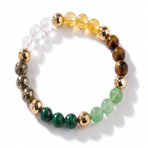
Certified & Energised
GemSense Dhan Yog Crystal Bracelet for Wealth & Financial Success
The reader-favourite place to start — five wealth stones on one wrist, SGL certificate in the box.
₹ 699₹ 1,399Wear your pyrite bracelet on your left hand — the "receiving" hand in most traditions — and put it on for the first time on a Sunday or Thursday morning, freshly bathed, with one clear intention. After that, the rule that genuinely matters is consistency: wear it daily, keep it away from water, and let it quietly remind you of your goal.
If a pyrite bracelet has just arrived at your door — or is sitting in your cart while you read this — you probably have the same three questions everyone asks: which hand, which day, and what are the rules? The internet answers these with either one vague line or a four-thousand-word lecture on planetary energies. Neither helps you at 8 a.m. when you're actually standing there putting the thing on.
So here is the pyrite rulebook, question by question, in plain language. Where a question applies to every crystal — like the eternal left-vs-right debate — you'll get the short pyrite-specific answer here and a link to our detailed guide, instead of the same lecture twice. And where a "rule" is really just tradition, we'll say so honestly, because knowing why a rule exists is what lets you relax about it.
Ten minutes from now, you'll know exactly how to wear this stone — and, just as usefully, what to stop worrying about.
Pyrite Wearing Rules at a Glance
| Rule | Short answer |
|---|---|
| Which hand | Left (receiving) hand by common tradition; right is acceptable — just stay consistent |
| Which day to start | Sunday or Thursday morning, after a bath, per common practice |
| First-time ritual | Dry cleanse, hold it, set one clear intention — no pandit required |
| Daily wear | Yes, pyrite is built for everyday wear |
| Water | No. Remove before bathing and swimming — moisture slowly damages pyrite |
| Sleeping | Allowed; take it off if the beads bother you at night |
| Combining | Fine with most wealth stones and with rudraksha; keep the stack to 2–3 pieces |
Which Hand Should You Wear a Pyrite Bracelet On?
Wear pyrite on your left hand if you want to follow the common tradition. In most crystal practice, the left is the "receiving" side — the hand through which new energy, including wealth and opportunity, is believed to enter your life. If the left genuinely feels wrong to you, the right hand is not a mistake.
Pyrite is worn almost entirely for money, ambition and willpower — things you are trying to attract — so the receiving-hand logic fits it neatly, and that's why most Indian wearers default to the left wrist. A smaller school prefers the right, the "action" hand, when you're actively chasing a goal rather than waiting for one; freelancers hunting clients sometimes choose it for exactly that reason. No classical text settles the debate, and consistency matters far more than the side. There's a practical angle too: pyrite beads are noticeably heavier than glass, so the non-dominant hand keeps them off your keyboard and out of your way.
Two smaller notes. If you prefer the ankle, the same logic applies — a pyrite anklet on the left ankle follows the receiving tradition, and nothing more complicated than that. And if you started on one hand and want to switch later, go ahead; take a quiet moment to restate your intention and carry on. The stone doesn't sulk. For the full theory behind all of this, read which hand to wear a crystal bracelet, and for how Indian custom treats each hand across stones, the left hand vs right hand guide goes deeper.
Which Day (and Time) Should You First Wear Pyrite?
Common practice says to first wear a pyrite bracelet on a Sunday or Thursday morning, after your bath. Sunday belongs to the Sun — fitting for a stone with pyrite's golden, solar character — while Thursday, Guruvaar, is linked to Brihaspati, the planet of wealth and expansion in Indian tradition.
Let's be clear about what this is: tradition, not a tested law. If your bracelet arrives on a Tuesday and you're excited, wearing it that evening will not "spoil" anything. The day-and-morning custom exists to make the beginning feel deliberate — a small muhurat you set for yourself, instead of tossing the bracelet on half-asleep between alarm snoozes. The two quiet minutes of attention are the real ritual; the calendar is just the frame around them.
"When to wear pyrite" has a second meaning, too — occasions. Wearers commonly put it on for salary negotiations, client pitches, interviews, shop openings and new-venture days. Many also anchor their start date to a wealth-linked day — Dhanteras, Akshaya Tritiya, even the first working day of a new financial year — which is a lovely, very Indian way to make the habit stick.
As for daily timing after that first wear: most people put the bracelet on in the morning while getting dressed and keep it on through the workday, since pyrite is very much a "working hours" stone. Some remove it in the evening, others never take it off except for water. Both are correct, because no rule governs this — only routine does.
How Do You "Activate" a New Pyrite Bracelet?
Activation is far simpler than sellers make it sound: cleanse the bracelet with a dry method, hold it for a minute, and state one clear intention. That is the entire ceremony. There is no secret mantra you must pay for, and no pandit is required — the intention itself is the activation.
Here's the first-day routine we suggest to GemSense customers:
- Cleanse it — dry methods only. Rest the bracelet overnight on a selenite charging plate, pass it through dhoop or incense smoke, or leave it in moonlight. Skip water and salt-water soaks entirely; you'll see why in the next section. Every method is explained in our crystal cleansing guide.
- Hold it and settle. Sit somewhere quiet, hold the bracelet in your palms, and take a few slow breaths. Thirty seconds is enough.
- Say one specific intention. "I stay focused on growing my business this year" works far better than a vague "abundance, please". Specific goals give the reminder something to point at.
- Wear it on your chosen hand. Done. Re-cleanse roughly once a month, or whenever the bracelet starts to feel like furniture instead of a reminder.
One honest note: nothing dramatic happens in that moment — no warmth, no tingling is required. Activation isn't magic entering the stone; it's clarity entering you. From that day, the bracelet works as a physical bookmark for a goal you've finally said out loud. And no, taking it off for a few days — travel, a hospital visit, plain forgetfulness — does not "deactivate" it. When you resume, a quick pass through incense smoke and one restated sentence brings you right back to where you were.
Can You Wear Pyrite Every Day? (Sleeping, Bathing, Gym)
Yes — pyrite is an everyday stone, and daily wear is exactly how it's meant to be used. At 6 to 6.5 on the Mohs hardness scale it handles normal life comfortably. The single non-negotiable exception is water: take the bracelet off before bathing or swimming, every single time.
That water rule isn't superstition — it's chemistry. Pyrite is iron disulfide (FeS₂), an iron-sulfur mineral, and repeated moisture slowly oxidises its surface. The metallic golden shine dulls first; with long neglect, a rusty, crumbly film can develop. This is a documented mineral behaviour, not seller folklore.
Indian humidity deserves its own line. If you live in a coastal or monsoon-heavy city — Mumbai, Chennai, Kolkata — don't store the bracelet in a steamy bathroom drawer. Keep it in a dry pouch or box; mineral references such as Mindat's pyrite entry note that even damp air, not just direct soaking, drives the oxidation collectors call pyrite decay.
Sleeping: traditionally fine, and some people like keeping the intention close overnight. There's no belief that pyrite "disturbs" sleep the way some say of high-energy stones; this one is a personal-comfort call. If the beads press into your wrist, take it off and leave it on the bedside table — nothing is lost. Gym: an ordinary sweaty workout won't ruin pyrite, but sweat is salty moisture, so wipe the beads with a dry cloth after heavy sessions. And it always, always comes off for the pool.
Everyday hand-washing is a smaller worry than people think — a few stray splashes on the wrist won't hurt if you towel off. It's the sustained soaking that matters: bathing, dishes, bucket laundry, monsoon downpours. For those, slip it off first and thank yourself later.
What Should You NOT Do With a Pyrite Bracelet?
Keep pyrite away from three things: water, harsh chemicals, and casual lending. The first two damage the stone physically. The third is tradition — a bracelet you've set an intention on is treated as personal, closer to a japa mala than a fashion accessory, and isn't passed around for friends to try.
- No baths, pools or salt-water "cleansing". Moisture is pyrite's one real enemy — dry cleansing methods only.
- No direct perfume, deodorant or sanitiser spray. Finish grooming first; the bracelet goes on last. The same goes for kitchen acids and cleaning sprays — take it off before scrubbing day.
- Don't lend it out. Letting someone admire it is fine; letting them wear it for a week defeats the point of a personal intention piece.
- Don't keep wearing a cracked bead or fraying thread. Get it restrung — a bracelet scattered across a railway platform helps nobody's prosperity.
And one thing you should not do is fear the stone. Reels love dramatic warnings, but missing a day or touching the "wrong" hand harms nothing. If your real question is who should avoid pyrite altogether — some wearers do describe it as intense, and a few groups traditionally skip it — that's answered honestly in our pyrite bracelet side effects guide.
Can You Wear Pyrite With Other Bracelets or Rudraksha?
Yes. Pyrite sits comfortably alongside most wealth and grounding stones — Citrine, Green Aventurine, Tiger's Eye, Black Tourmaline — and there is no traditional bar on wearing it with rudraksha. Keep the stack to two or three pieces so each intention stays distinct, and you're fine.
If you wear rudraksha too, the simple convention many follow is rudraksha on the right wrist or as a mala, pyrite on the left — one is a seed of devotion, the other a stone of intention, and they don't quarrel. A metal watch on the same wrist is also fine, though pyrite beads clicking against a watch case all day can scratch the case, so many people split wrists for the watch's sake, not the stone's. Gold and silver jewellery raise no traditional objection either — pyrite is not a jyotish ratna with strict metal pairings, so wear your usual chain and ring without a second thought.
For stone-by-stone pairings — which combinations reinforce each other and which just look cluttered — our crystal bracelet combinations guide covers it properly. And if you're building a money-focused stack from scratch, everything in the wealth & prosperity collection is chosen to sit well next to pyrite.
Does It Matter If the Bracelet Is Original?
More than any rule on this page, yes. A golden-painted hematite or resin copy can be worn on the correct hand, on a perfect Thursday, with a sincere heart — and it's still just costume jewellery. Run the simple tests in our guide on how to check if a crystal bracelet is real, and prefer sellers who prove their stones: every GemSense pyrite piece ships SGL lab-certified, and our crystal certification page shows exactly what that certificate covers.
Pyrite Wearing FAQs
Is it okay to wear a pyrite bracelet on the right hand?
Yes. The left hand is the popular "receiving" tradition, but no authority forbids the right — some wearers deliberately choose it as the action hand while working towards a goal. Pick whichever feels natural, then stay consistent instead of switching wrists every few days.
I forgot to take it off in the shower — is it ruined?
No. One shower will not destroy pyrite. Take it off, pat the beads and the thread completely dry, and let it air for an hour. It's repeated soaking that dulls the shine and invites oxidation — so just don't let it become a habit.
Can I wear two pyrite pieces at once?
You can. A bracelet worn with a pyrite anklet or a pyrite bangle is a common combination, and no tradition forbids doubling the same stone. Just remember the honest maths: one piece worn with attention does more than three worn as decoration.
Do I need a pandit to activate my pyrite bracelet?
Honestly, no. Formal prana-pratishtha rituals belong to classical jyotish gemstones set in rings. For a crystal bracelet, cleansing it and setting your own intention is considered enough by most practitioners. If a small puja gives you confidence, lovely — but it's for you, not the stone.
Which finger is a pyrite ring worn on?
Pyrite isn't one of the nine classical jyotish ratnas, so no scripture fixes a finger; ring wearers usually pick the ring or middle finger of the working hand. For what it's worth, GemSense makes pyrite as bracelets, anklets and bangles rather than rings.
That's the whole rulebook — shorter than the reels made it sound, no? Left hand, a calm Sunday or Thursday start, one clear intention, and no water. Everything after that is simply wearing it every day while you do the work the stone is there to remind you of. And the next time someone quizzes you about a rule you've "broken", you'll know exactly which rules are chemistry, which are tradition, and which were invented last Tuesday for views.
Crystals are a beautiful spiritual tradition, not medicine. They support your intentions — they don't replace effort or professional care.
Shop the crystals in this guide
Certified & Energised
GemSense Dhan Yog Crystal Bracelet for Wealth & Financial Success
The reader-favourite place to start — five wealth stones on one wrist, SGL certificate in the box.
₹ 699₹ 1,399Pyrite Anklet Benefits: The Lakshmi Payal Tradition, Explained
पाइराइट ब्रेसलेट के फायदे: धन, आत्मविश्वास और असली की पहचान
Related Posts

Rudraksha Mala Guide: Japa Rules, 108 vs 54 vs 32 Beads & How to Spot an Original

5 मुखी रुद्राक्ष के फायदे: पंचमुखी रुद्राक्ष किसे और कैसे पहनना चाहिए

How to Wear a Pyrite Anklet: Which Leg, Which Day & the Rules That Matter

6 Mukhi Rudraksha Benefits: Kartikeya's Bead for Confidence, Focus & Expression


